Digital Epigraphy
Collaboration between the Epigraphic Survey and Museo Egizio operated by Krisztián Vértes. An educational hub for Egyptologists, artists, illustrators, designers and anybody who is interested in knowing more about digital documentation techniques applied on ancient Egyptian monuments. Their goal is to provide digital documentation solutions for our colleagues working in the field or at home, and to present up-to-date information about the latest methods, trends and tools utilized in digital epigraphy.
Epigraphic Survey
The Epigraphic Survey of the Institute for the Study of Ancient Cultures (ISAC, previously Oriental Institute) of Chicago University is based at Chicago House in Luxor. The mission of the Survey since its founding in 1924 has been to produce photographs and precise line drawings of the inscriptions and relief scenes on major temples and tombs at Luxor for publication. More recently, the Survey has expanded its program to include conservation, restoration, site management, and conservation training, and new computerized drawing techniques have been integrated into their documentation program.
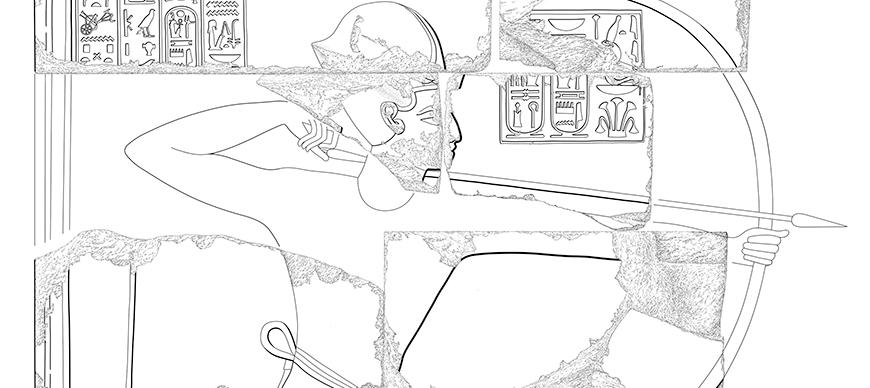
Karnak Great Hypostyle Hall Project
This Project is a joint endeavor of the University of Memphis and the Université de Québec à Montréal (Canada). It has three aims:
- To make a complete scientific record of all the hieroglyphic texts and relief carvings from the Hypostyle Hall.
- To make these inscriptions widely available to scientists and the world- wide public through traditional publications and via digital technologies like the internet.
- To conduct scholarly research and analysis of the Hypostyle Hall to better understand those aspects of Egyptian civilization reflected in its inscriptions, including its history, religion, politics, society, and culture.